Preliminary Data Shows BrainMix Can Be Applied to Genetic Disease Models
Early-stage data suggests that BrainMix protocols can be successfully applied to a mouse genetic model of a neuromuscular degenerative disease, opening new possibilities for disease modelling and therapeutic research.
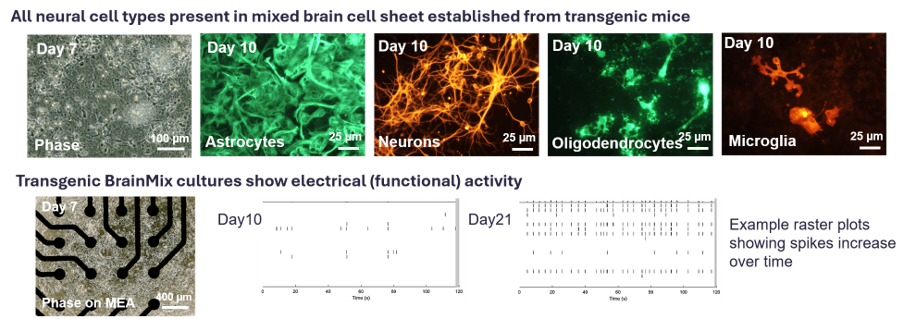
Following freezing and thawing using BrainMix protocols, preliminary findings demonstrated the successful generation of a multicellular brain cell sheet derived from a transgenic mouse model containing:
- Neurons
- Astrocytes
- Oligodendrocytes
- Microglia
Importantly, researchers also observed that the neurons retained electrical signalling capability, with firing rates increasing over time.
The cultures were maintained beyond the natural lifespan of the mouse model, enabling investigation of later disease stages not easily studied in vivo.
These promising results indicate that BrainMix may provide a valuable platform for a wider range of genetic disease models, while also supporting tissue sharing where access to specialist models is limited.